
Quick Answer
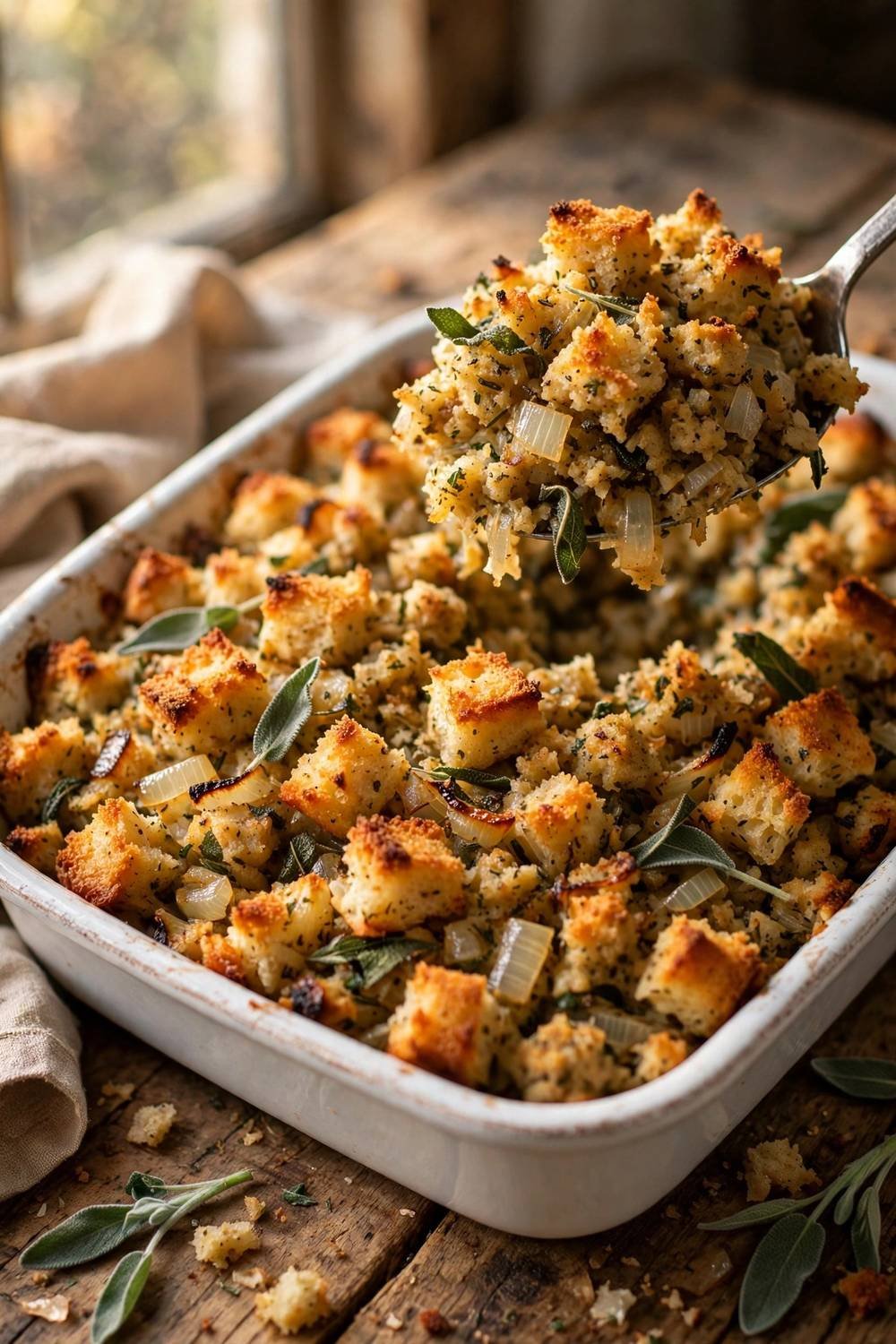
Classic sage and onion stuffing is buttery bread cubes baked with sweet onion, celery and fresh sage until the top turns golden and crisp and the middle stays soft. This classic sage and onion stuffing recipe takes about 20 minutes of hands on work plus 45 minutes in the oven, serves 8 to 10, and can be assembled the day before Thanksgiving.
Why This Recipe Works
Every Thanksgiving table needs stuffing, and the classic version earns its place because it does not try to be clever. Bread, butter, onion, celery and sage are all it takes. The bread soaks up the broth and turns custardy inside, while the top crisps into golden edges that everyone fights over.
It is also one of the easiest dishes on the holiday menu. There is no turkey to time, no sauce to whisk, and no last minute panic. You mix it in one bowl, bake it in one dish, and it holds warm on the table while everything else gets carved.
Why You Will Love This Stuffing
- Make ahead friendly: assemble it the day before and bake it on the day.
- Crispy golden top and soft savory middle in every serving.
- Only everyday ingredients, nothing fancy to hunt down.
- Feeds 8 to 10 generously from a single baking dish.
Ingredients
- 1 pound day old white bread or sourdough, cut into 1 inch cubes (about 10 cups)
- 1/2 cup unsalted butter (1 stick)
- 2 large yellow onions, diced
- 3 celery stalks, diced
- 2 tablespoons fresh sage, finely chopped
- 1 tablespoon fresh thyme leaves
- 2 to 2 1/2 cups low sodium chicken or turkey broth
- 2 large eggs, beaten
- 1 teaspoon salt
- 1/2 teaspoon black pepper
Instructions
- Dry the bread. Spread the bread cubes on a baking sheet and toast at 300 degrees F for 15 minutes until dry and lightly crisp, or leave them out on a tray overnight. Dry bread soaks up broth without turning to mush.
- Cook the vegetables. Melt the butter in a large skillet over medium heat. Add the onion and celery with a pinch of salt and cook for 8 to 10 minutes until soft and sweet, not browned.
- Add the herbs. Stir in the fresh sage and thyme and cook for 1 minute more, just until fragrant.
- Toss it together. Put the dried bread cubes in a very large bowl. Pour the buttered vegetables over the top and toss gently so every cube gets coated.
- Moisten with broth. Pour in 2 cups of broth a little at a time, tossing as you go, until the bread is evenly moist but not soggy. Add the last 1/2 cup only if the bread still looks dry.
- Add the eggs. Pour in the beaten eggs, salt and pepper, and fold gently until everything is combined. The eggs bind the stuffing so it slices cleanly.
- Bake covered, then uncovered. Transfer to a buttered 9 by 13 inch baking dish, cover tightly with foil and bake at 350 degrees F for 30 minutes. Remove the foil and bake 15 minutes more until the top is golden and crisp.
- Rest and serve. Let the stuffing rest for 10 minutes before serving so it sets. Serve warm, straight from the dish.
The Bread Makes the Stuffing
The single most important choice in this recipe is the bread, and it needs to be dry. Fresh soft bread collapses into paste the moment broth hits it. Day old bread, or cubes toasted in the oven, holds its shape and soaks up flavor like a sponge.
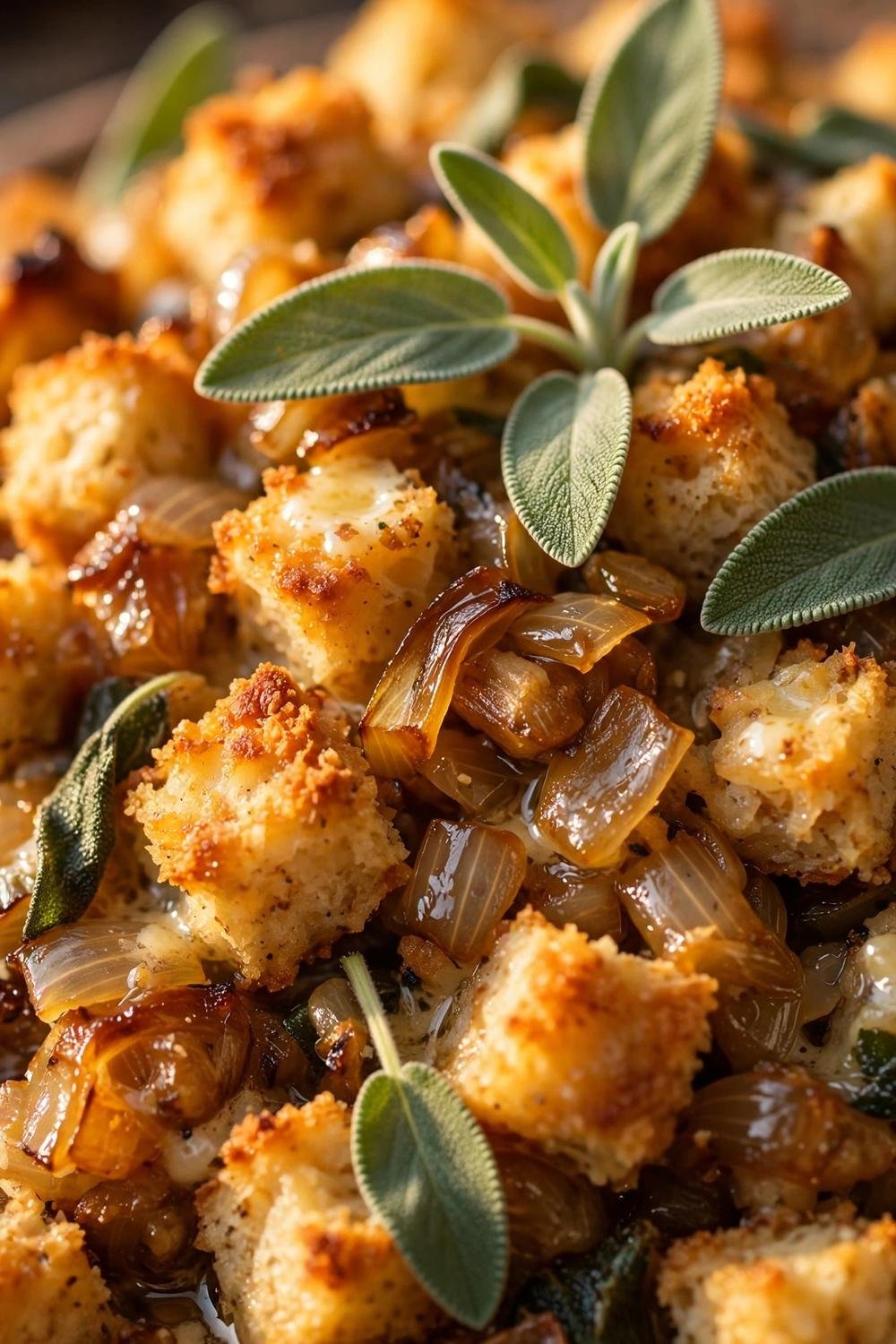
White sandwich bread gives the softest, most classic texture. Sourdough adds a gentle tang that works beautifully with sage. Either way, cut the cubes a full inch wide: small cubes turn to mush, and big cubes stay distinct and give you those crispy edges. If your bread is fresh, do not skip the toasting step. Fifteen minutes in a low oven is the difference between stuffing and porridge.
Mistakes to Avoid
- Using fresh soft bread. It turns soggy and gummy. Dry the cubes first, always.
- Drowning it in broth. Add broth gradually and stop when the bread is moist. Too much liquid makes a dense, wet brick.
- Skipping the eggs. Without them the stuffing crumbles apart on the serving spoon. Two eggs are enough to bind it without making it eggy.
- Baking uncovered the whole time. The top burns before the middle cooks. Cover first, then uncover for the last 15 minutes to crisp it.
- Stuffing the turkey with it. This recipe is baked separately, which is safer and gives you the crispy top that stuffing inside a bird never gets.
Serving and Storage
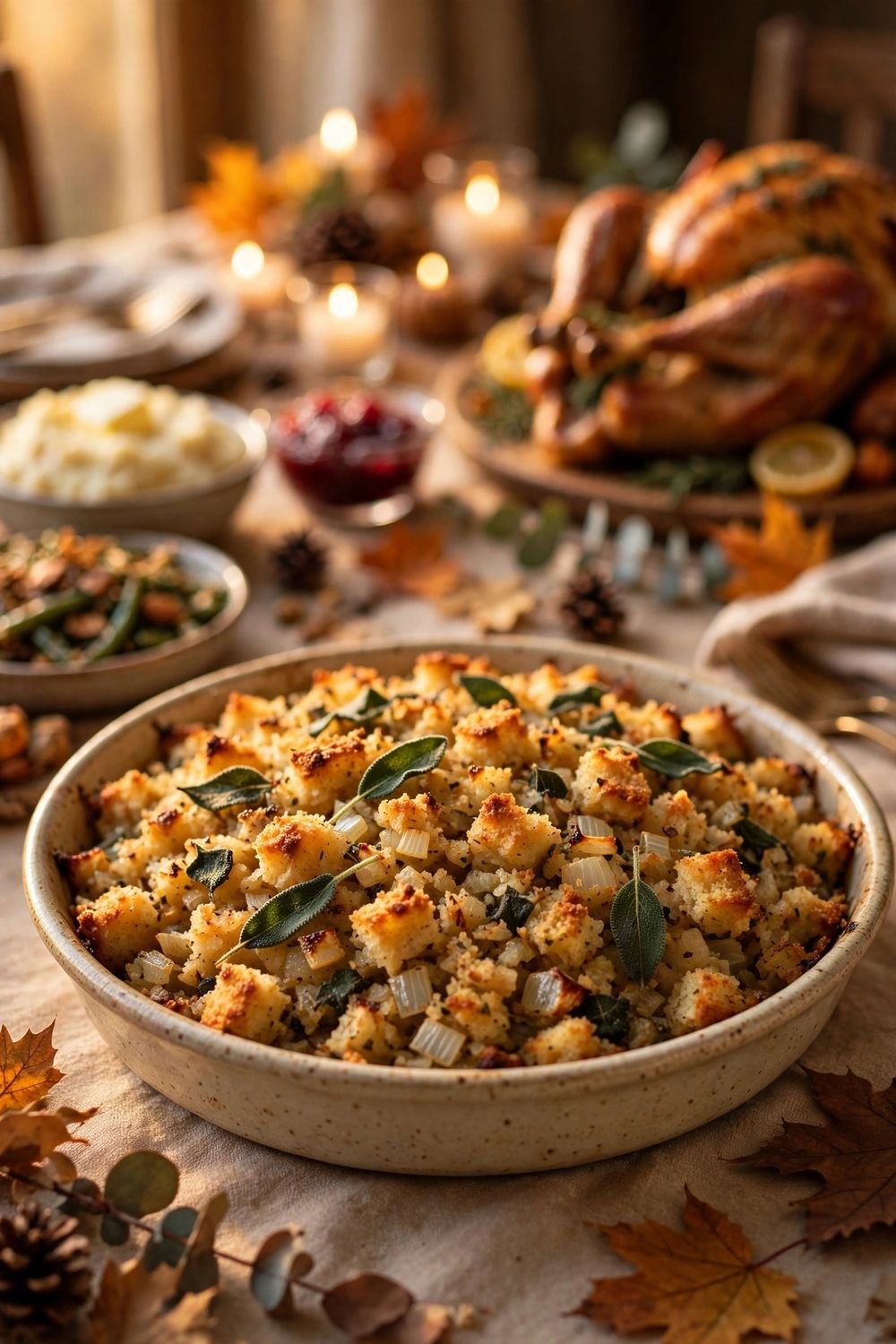
This stuffing belongs beside the turkey or the ham, where its golden top and sage aroma pull everyone to the table. It serves 8 to 10 generously, and it is the side dish people go back for seconds of.
Store leftovers covered in the refrigerator for up to 4 days. Reheat in a covered dish at 325 degrees F with a splash of broth until warm, then uncover for a few minutes to crisp the top again. It freezes well for up to 2 months: cool completely, freeze in portions, and thaw overnight in the refrigerator before reheating.
More Thanksgiving Favorites
If this stuffing starts a Thanksgiving streak, keep the season going. Honey glazed baked ham brings a sweet caramelized main dish to the same table. Roasted turkey wings with gravy give you the full holiday flavor without roasting a whole bird. And creamy garlic mashed potatoes are the classic partner for a spoonful of stuffing.
- Honey Glazed Baked Ham: https://americasbestwings.us/honey-glazed-baked-ham/
- Roasted Turkey Wings with Gravy: https://americasbestwings.us/roasted-turkey-wings-gravy/
- Creamy Garlic Mashed Potatoes: https://americasbestwings.us/creamy-garlic-mashed-potatoes/
Frequently Asked Questions
Can I make sage and onion stuffing the day before?
Yes. Assemble the stuffing completely, cover the dish tightly and refrigerate overnight. On the day, let it sit at room temperature for 20 minutes, then bake as directed, adding 5 to 10 minutes to the covered baking time.
What is the best bread for stuffing?
Day old white bread or sourdough, cut into 1 inch cubes and dried in the oven. Both hold their shape and soak up broth without collapsing. Avoid very soft fresh bread and avoid dense rye.
Can I make this stuffing vegetarian?
Yes. Use vegetable broth instead of chicken or turkey broth. Everything else in the recipe is already vegetarian, and the flavor stays rich and savory.
How do I keep stuffing from drying out?
Add enough broth so the bread is evenly moist before baking, keep the dish covered for the first 30 minutes, and do not overbake the uncovered stage. Fifteen minutes uncovered is enough for a crisp golden top.