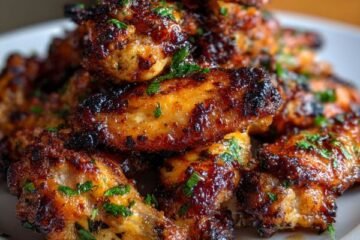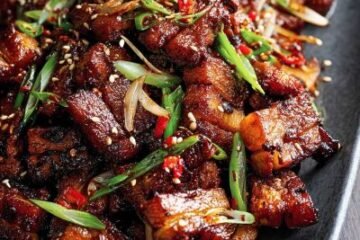
If you’ve ever had proper Korean fried chicken, you already know the magic: a glossy, sticky glaze that’s spicy, sweet, savory, and impossibly addictive all at once. These Korean gochujang wings chase that exact feeling — deeply crispy on the outside, lacquered in a fiery-sweet gochujang glaze that clings to every bite. And the best part? They’re baked, not double-fried, so you get that signature flavor with a fraction of the effort and oil.
I fell in love with gochujang years ago, and it’s earned a permanent spot in my fridge. That fermented chili paste is the soul of this dish — it brings heat, yes, but also a deep, savory funk and a gentle sweetness you simply can’t fake with hot sauce. Once you taste how that glaze caramelizes against crispy wings, plain buffalo wings start to feel a little one-dimensional. Let me walk you through it.
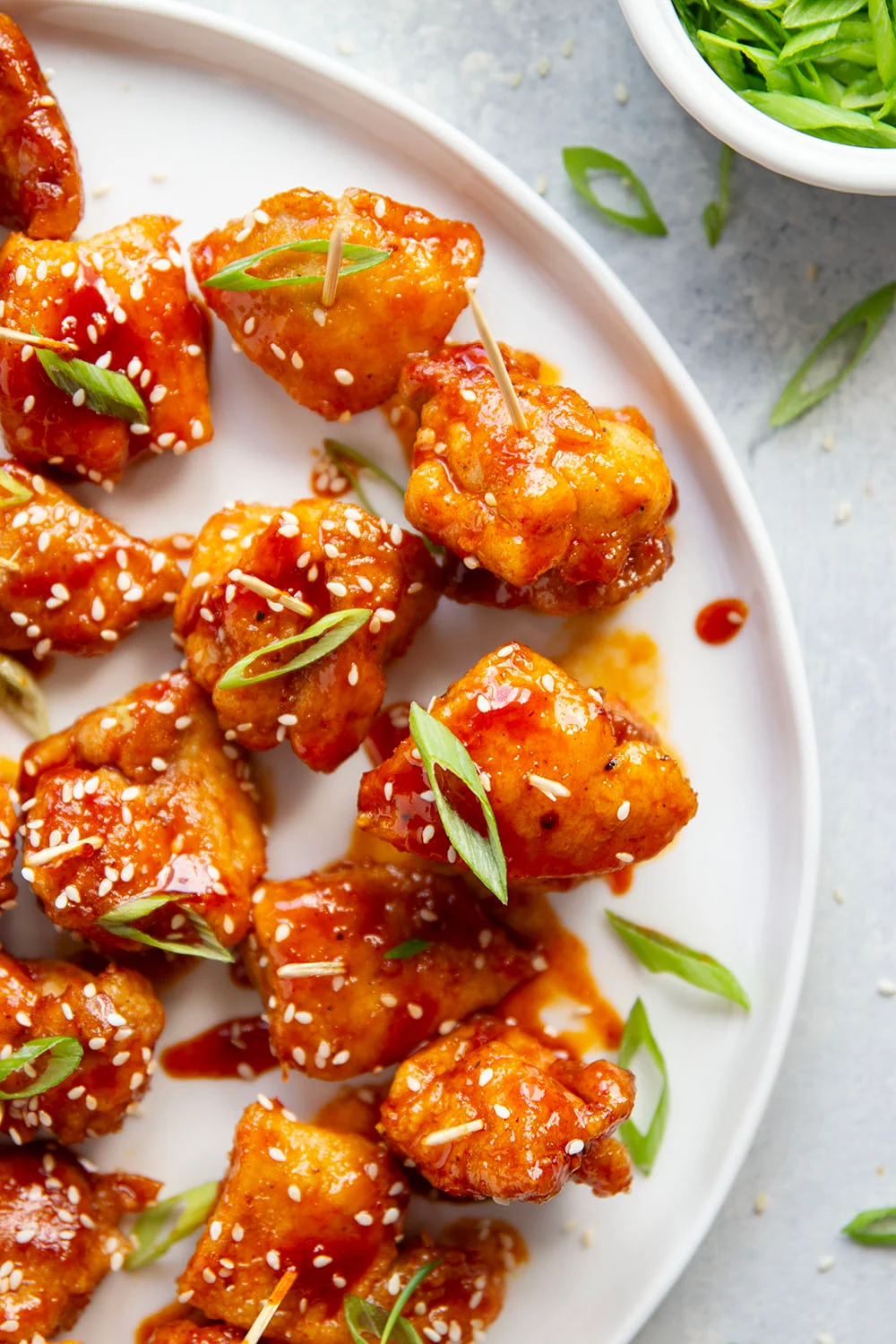
How to Make Korean Gochujang Wings
Pat the wings dry, toss with baking powder and salt, and bake at 425°F (220°C) for 45–50 minutes, flipping once, until crisp. Simmer gochujang, soy sauce, honey, garlic, and ginger into a glossy glaze, toss the hot wings until fully coated, and finish with sesame seeds and scallions. Total time: about 1 hour, mostly hands-off.
Because gochujang is naturally thick, the glaze turns sticky on its own — no cornstarch needed. That’s what makes it cling like glass.
What Is Gochujang?
Gochujang (고추장) is a Korean fermented red chili paste made from chili powder, glutinous rice, fermented soybeans, and salt. It’s thick, deep red, and balances spicy, savory, and subtly sweet flavors in one ingredient. That fermentation is the key — it gives gochujang a rich, umami depth that ordinary hot sauce can’t match. You’ll find it in a tub in the Asian aisle of most large grocery stores or any Korean market. Once opened, it keeps in the fridge for months.
Why This Recipe Works
A great gochujang wing comes down to three things, and this recipe nails all of them:
Crispy skin to carry the glaze. A light coat of baking powder raises the skin’s surface pH so it browns and blisters in the oven, crisping like fried with none of the deep-frying. A crisp wing holds the sticky glaze far better than a soft one.
Gochujang does the heavy lifting. This single paste delivers heat, umami, and sweetness all at once, so the glaze tastes layered and complex with very few ingredients. It’s the difference between “spicy” and genuinely delicious.
Balance is everything. Honey rounds out the heat, soy sauce deepens the savory side, and a splash of rice vinegar keeps the whole thing bright. Together they create that craveable sweet-spicy-savory profile Korean fried chicken is famous for.
Ingredients
Makes about 4 servings (roughly 2 lbs / 900g of wings)
For the crispy wings:
- 2 lbs (900g) chicken wings, split into drumettes and flats, tips removed
- 1 tablespoon aluminum-free baking powder
- 1 teaspoon fine sea salt
- ½ teaspoon garlic powder
For the gochujang glaze:
- 3 tablespoons gochujang (Korean chili paste)
- 2 tablespoons honey (or brown sugar)
- 2 tablespoons low-sodium soy sauce
- 1 tablespoon brown sugar
- 1 tablespoon rice vinegar
- 1 tablespoon toasted sesame oil
- 3 garlic cloves, minced
- 1 tablespoon fresh ginger, grated
- 1 teaspoon gochugaru (Korean chili flakes, optional for extra heat)
- 1–2 tablespoons water, to loosen
To finish:
- 1 tablespoon toasted sesame seeds
- 2 scallions, thinly sliced
Equipment You’ll Need
- A rimmed baking sheet lined with foil
- A wire rack that fits inside it (so hot air circulates and crisps the wings on all sides)
- A small saucepan for the glaze
- A large mixing bowl
No wire rack? Bake the wings directly on the foil-lined sheet and flip them halfway — the bottoms just won’t be quite as crisp.
Step-by-Step Instructions
1. Dry the wings. Pat every piece with paper towels until the skin feels dry to the touch. Wet skin steams instead of crisping, so don’t skip this. For extra crunch, leave the wings uncovered in the fridge for an hour first.
2. Season for crisp. In a large bowl, toss the wings with baking powder, salt, and garlic powder until lightly and evenly coated. Use baking powder, not baking soda — baking soda in this amount tastes metallic.
3. Bake until golden. Arrange the wings in a single layer on the rack with space between each one. Bake at 425°F (220°C) for 45–50 minutes, flipping once halfway, until deeply golden and crisp. Don’t pull them early — the last 10 minutes is where the crunch develops.
4. Make the glaze. While the wings bake, whisk the gochujang, honey, soy sauce, brown sugar, rice vinegar, sesame oil, garlic, ginger, and gochugaru in a small saucepan with a splash of water. Bring to a gentle simmer over medium-low heat and cook for 4–5 minutes, stirring, until glossy and slightly thickened. The brief simmer mellows the raw garlic and lets the flavors meld.
5. Toss while hot. Transfer the crispy wings to a clean bowl, pour over most of the warm glaze, and toss until every piece is fully coated and glistening. Reserve a little glaze for serving.
6. Broil for the sticky finish (optional but worth it). Return the glazed wings to the rack and broil on high for 1–2 minutes, watching closely. The sugars caramelize and the glaze sets into a tacky, glossy lacquer — that signature Korean fried chicken shine. Sugar burns fast, so keep your eyes on it.
7. Garnish and serve. Sprinkle generously with toasted sesame seeds and sliced scallions, and serve hot with the reserved glaze on the side.
Pro Chef Tips for the Best Gochujang Wings
- Toast your sesame seeds. A quick dry-pan toast deepens their nutty flavor and makes the finish taste far more authentic.
- Adjust the heat to taste. Gochujang brands vary in spiciness. Start with 3 tablespoons, then add gochugaru if you want more fire or extra honey to cool it down.
- Don’t skip the sesame oil. Just a teaspoon adds that distinctive toasty aroma that defines Korean flavors — add it at the end so its fragrance stays bright.
- Double the glaze. It’s incredible on rice bowls, salmon, tofu, or noodles, and keeps well in the fridge — make extra on purpose.
- Want them extra glossy? Brush a second thin layer of glaze on right after broiling while the wings are still blazing hot.
Common Mistakes to Avoid
The wings turn soggy when they’re sauced before they’re fully crisp, so always crisp first and glaze last. The glaze scorches and turns bitter under the broiler if you walk away — keep that step short and watchful. And the flavor falls flat when the gochujang isn’t balanced; if it tastes too sharp or too spicy, a little more honey rounds it out, while a splash more soy or vinegar lifts a glaze that’s gone too sweet.
How to Serve
These wings are made for cooling, fresh accompaniments. Serve them with steamed white rice, a crunchy cucumber salad, or quick-pickled radish to cut the heat. For a Korean-style spread, add kimchi and a cold drink. They’re a guaranteed hit for game day, parties, or an easy dinner with serious wow factor.
Storage and Reheating
Store leftovers in an airtight container in the fridge for up to 3 days. To revive the crisp, reheat in a 400°F (200°C) oven or air fryer for 6–8 minutes — skip the microwave, which makes the skin rubbery. The glaze keeps separately in the fridge for up to a week and freezes well, so a big batch is always worth it.
Can You Make These in an Air Fryer?
Yes. Air-fry the seasoned wings at 380°F (190°C) for 12 minutes, flip, then increase to 400°F (200°C) for 8–10 minutes until crisp. Toss in the warm gochujang glaze and air-fry 2 more minutes to set the stickiness. Same bold flavor, faster cook — just don’t overcrowd the basket or they’ll steam.
Frequently Asked Questions
What is gochujang? Gochujang is a Korean fermented red chili paste made from chili powder, glutinous rice, fermented soybeans, and salt. It’s thick, deep red, and balances spicy, sweet, and savory umami flavors, making it the heart of this glaze.
Where can I buy gochujang? Look in the Asian or international aisle of most large supermarkets, at any Korean or Asian grocery store, or online. It usually comes in a red tub or squeeze bottle and lasts for months in the fridge once opened.
What can I substitute for gochujang? There’s no perfect swap, but in a pinch you can blend sriracha or chili-garlic sauce with a little miso paste and honey to mimic the sweet-savory-spicy balance. The flavor won’t be identical, but it gets you close.
Are gochujang wings very spicy? They have a moderate, building heat rather than a sharp burn, balanced by honey and soy. You can easily make them milder with less gochujang and more honey, or hotter by adding gochugaru chili flakes.
What’s the difference between gochujang and gochugaru? Gochujang is a thick fermented chili paste, while gochugaru is dried Korean chili flakes. Gochujang forms the base of the glaze; gochugaru is an optional add-in for extra dry heat.
Is this real Korean fried chicken? It’s inspired by Korean fried chicken (yangnyeom-style), adapted into an easy baked version. Traditional Korean fried chicken is double-fried for extra crunch, but this oven method delivers that signature sticky-spicy glaze with far less effort and oil.
Recipe note: For consistent results, weigh your wings and use about 1½ teaspoons of baking powder per pound. Gochujang varies in heat and saltiness by brand, so always taste the glaze and adjust the honey-to-soy balance before tossing — that final tweak is what makes these taste like they came from a Korean fried chicken shop.